

Measure the physical properties of hair and haircare products
Learn about the different methods in which a Texture Analyser can be used to determine the physical properties of hair and hair care products.

Why measure the physical properties of hair and haircare products?
The measurement of texture properties in both hair and haircare products holds paramount importance in the context of today's beauty-conscious world. With appearance being a top priority in our image-centric society, hair holds a prominent position on the list of personal attributes. Consequently, the haircare industry occupies a substantial segment within the beauty sector, demanding consistent high standards, novelty, and visible results to satisfy discerning consumers. The science of texture analysis plays a pivotal role in this domain, with applications spanning the entire spectrum of haircare product development. A Texture Analyser, equipped with a diverse range of compressive and tensile capabilities, employs specifically designed test methods to assess an extensive array of physical properties. These methods not only enable the fine-tuning of formulations and evaluation of packaging materials but also serve as a quantitative means to validate claims regarding product performance on hair itself. The measurement of texture properties, from tube to head, represents an indispensable practice that drives innovation, quality assurance, and the creation of haircare products that meet and exceed consumer expectations.


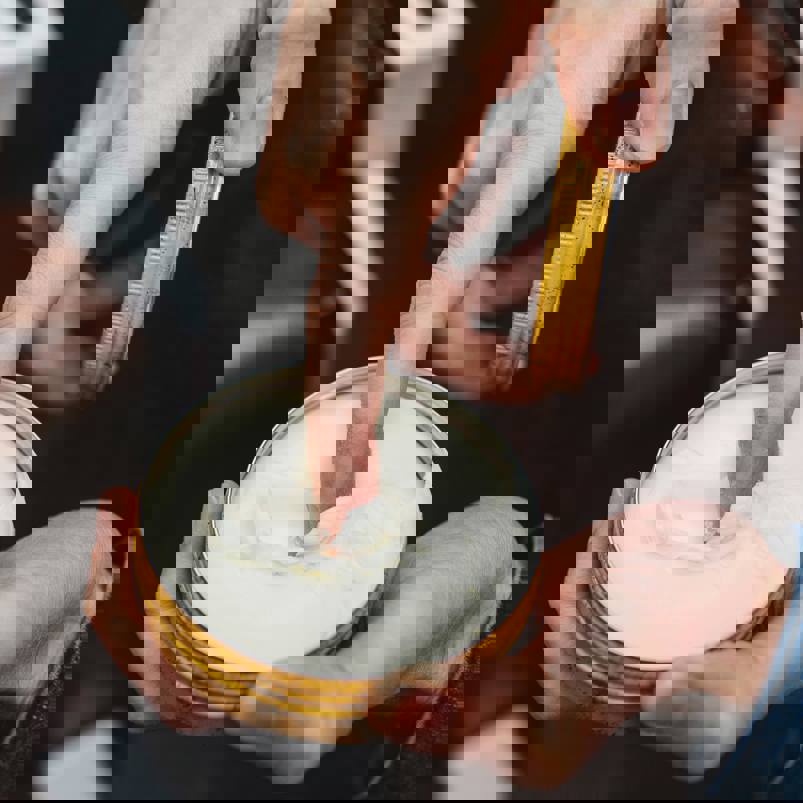


How a Texture Analyser can be applied to hair and haircare physical property measurement?
Hair and haircare products encompass a wide range of treatments, styling products, and conditioners that rely heavily on texture and mechanical properties to ensure both efficacy and a positive consumer experience. Utilising a Texture Analyser in the development and manufacture of these products offers substantial benefits:
- Product development: Utilising the Texture Analyser, R&D teams can pinpoint and modify the impact of specific ingredients on hair properties, such as reducing frizziness or increasing shine.
- Conditioner and treatment efficacy: The ease of detangling hair after applying conditioners or treatments can be quantified, determining the slip and effectiveness of the product.
- Styling hold: For gels, mousses, and hairsprays, the holding strength and longevity can be assessed. This determines how well a hairstyle will maintain its shape under various conditions.
- Rheological properties: Understanding the flow and spreadability of products like shampoos, conditioners, or hair masks ensures they are easy to apply and rinse out.
- Quality control: It's essential to ensure that hair care products consistently deliver promised results. Periodically testing products using the Texture Analyser can maintain a consistent standard, ensuring, for instance, that a conditioner always provides the same level of smoothness.
- Shelf life studies: Over time, hair products may lose their efficacy. By analysing how a product's textural impact on hair changes, companies can predict the product's shelf life and understand the optimal storage conditions.
- Ingredient substitution: When formulating products with new or alternative ingredients, the Texture Analyser helps ensure that the product still offers the desired benefits, like maintaining hair strength or elasticity.
- Consumer sensory perception: The feel and texture of hair after product application are crucial for consumers. By correlating data from the Texture Analyser with consumer feedback, companies can refine products to better meet consumer preferences, such as making hair feel silkier or less weighed down.
- Packaging interaction: Hair products, especially those with natural ingredients, might react with packaging materials, altering their consistency or efficacy. The Texture Analyser can identify these potential issues, ensuring the product remains effective from the first use to the last.
- Comparative analysis: In a competitive market, it's beneficial to know how one's products stack up against others. Using the Texture Analyser, companies can compare the textural impact of their products on hair to those of competitors, identifying potential market advantages or areas for improvement.
- Dispenser performance: Measuring the force required to dispense products, especially from pump bottles or aerosols, ensures user-friendliness.
- Claims substantiation: Haircare products often tout benefits like "extra hold," "intense hydration," or "frizz control." A Texture Analyser provides empirical data to substantiate these claims, ensuring credibility.
- Product stability: Over time, some products may separate or change in consistency. Regular texture analysis can indicate shelf life and long-term stability.
By harnessing insights from tools like the Texture Analyser, hair care businesses can produce innovative solutions that address specific hair concerns, guarantee consistent quality, and remain attuned to the dynamic needs of consumers.
Typical measurements
Texture Analysers are instrumental in evaluating the performance and quality of hair and haircare products. When it comes to hair and its care products, several texture and mechanical properties are of primary interest:
Understanding these texture and mechanical properties allows haircare product developers to optimise formulations to cater to various hair types and conditions. It also supports marketing claims, ensures consistency, and helps gauge user satisfaction. By ensuring these properties align with consumer expectations, manufacturers can better ensure product success in the market.
Typical graphs indicating relevant texture parameters


Typical product test and graph
Case studies
Whether its providing the solution for Croda and L’Oreal to measure hair bending/flexural properties, allowing Unilever and Wacker Metroark to measure friction and hair combing performance or offering a method for BASF and Momentive to substantiate their hair styling polymer and conditional agent effectiveness, a Texture Analyser is adaptable and flexible in its application to measure the bespoke mechanical properties of your product and then enable its quality to be controlled in your manufacturing to guarantee consistency and customer satisfaction.
With deep expertise in hair and hair product texture analysis, we’re well equipped to support innovation in this sector – just ask our customers.
Probes and attachments for measuring the physical properties of haircare products
A wide range of probes and attachments can be integrated with our instruments, enabling precise testing tailored to the specific product or material under evaluation. Applications include the Hair Stiffness Rig used to compare the effects of different styling polymers, actuation tests used to assess the force to deliver hair products from a pump dispenser or the Volscan Profiler, employed to measure the effect on hair volume as a result of applying different conditioning agents.
Over the years, we have collaborated with leading scientists and organisations in the field to design and refine attachments such as the Film Support Rig for assessing polymer film characteristics and the Sachet/Tube Extrusion Rig for measuring the force required to remove contents from packaging. When a suitable test solution did not already exist, we developed one – examples include the Hair Combing Rig, Hair Suppleness Rig and Hair Stiffness Rig, all of which are registered within our growing portfolio of Community Registered Designs.
A selection of special attachments and typical measurements which are commonly used in this application area are shown, although this does not necessarily include the complete range available for the testing of hair and haircare products. Any of the Texture Analyser range can be used for the product tests listed.

Hair Combing Rig
Enables the comb to be disengaged at the end of each combing cycle for realistic continuous assessment of hair combability.

Hair Suppleness Rig
Measures resistance of a hair sample to being run through a set of
smooth bars, representative of running fingers through the hair.

Hair Stiffness Rig
Can be used as an indicator of softness/stiffness by measuring bending properties of hair before and after treatment.
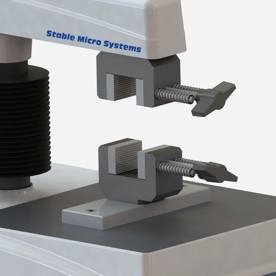
Tensile Grips
Tensile Grips can be used to support hair fibres to determine stiffness/bending strength.
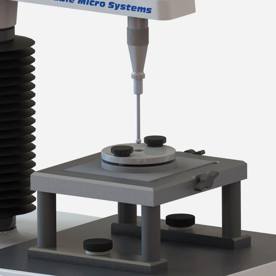
Film Support Rig
This rig can be employed for the measurement of biaxial extensional properties of polymeric fixative films.

Cylinder Probes
Used to assess hardness and stickiness of styling waxes – spherical probes used where product surfaces are uneven.
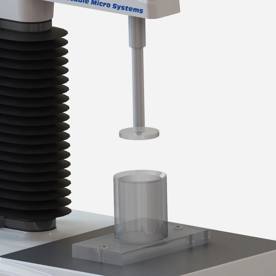
Back Extrusion Rig
Assesses consistency of e.g.creams and lotions which affects removal from containers and product application.
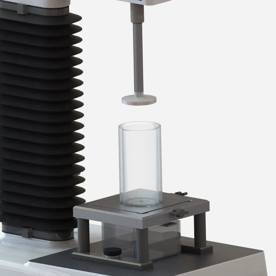
Forward Extrusion Rig
Allows consistency assessment by simulating the force required to extrude the sample through an orifice by a consumer.

1/2" Ø Hemispherical Probe
Allows measurement of the force required to release hair fixatives from aerosols, soap/cream from dispensers.
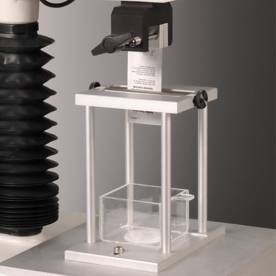
Sachet/Tube Extrusion Rig
Allows manufacturers to measure the ease of removal and application of products such as pastes, creams and gels.

Volscan Profiler
The hair sample is rotated at various speeds whilst a laser maps the contours of the splayed hair tress and calculates frizziness, curl retention and volume related parameters as a result of tress preparation or added treatments.

Dynamic Hairspray Analysis
The Texture Analyser, fitted with a sample holder and spraying devices,
is used to determine stiffness of untreated and resin-modified hair,
duration of tack, maximum value of tack force, and time of drying.
Test methods
Exponent Connect software includes a comprehensive range of test methods for hair and haircare products, all instantly accessible at the click of a button. We streamline your texture testing process, ensuring faster access to methods and ready-to-use analysis files for your product properties.
Using the Texture Analyser for new haircare ingredient and product ideas
Hair and haircare research, development, and production have seen numerous innovations recently, focusing on addressing diverse hair types, enhancing product efficacy, and incorporating sustainable practices. Here are some new ingredient and product ideas in hair and haircare:
These innovations in ingredients, products, and trends indicate a shift towards personalised, sustainable, and holistic haircare solutions, addressing both the functional and ethical demands of consumers.
Recent hair and haircare product research
Here is some recent interesting research in hair and haircare product development using the Texture Analyser:
- Development of a three‐point cantilever bending technique to study the mechanical properties of hair styling ingredients
- Eavesdropping on the Failure of Mechanically Stressed Omega Loop Assemblies.
- Enviromechanical Assessment of Fixative Hair Fiber Composite Films.
- Genipa americana L.: A New Phytochemical for White Hair Coloring
- Prediction of breakage in human hair caused by cyclical extension using infrared spectroscopy coupled with multivariate curve resolution
- Ecofriendly hair dye extraction from wastewater pericarp processing by-products of water caltrop (Trapa quadrispinosa): Optimization and evaluation
- Exploration of the hair combing forces resulting from different cosmetic treatments
- Development of Tea Seed Oil Nanostructured Lipid Carriers and In Vitro Studies on Their Applications in Inducing Human Hair Growth
- Ionic liquid and ultrasound-assisted extraction of chestnut shell pigment with good hair dyeing capability
- Reimagining Hair Science: A New Approach to Classify Curly Hair Phenotypes via New Quantitative Geometrical & Structural Mechanical Parameters
- Evaluation of the Surface Properties of Hair with Acoustic Emission Analysis


