

Tensile testing for texture analysis and materials testing
 5 minute read


What is a tensile test?
A tensile test pulls or stretches a sample and as a result the extensibility/elongation and tensile strength properties are measured in terms of force required to stretch and distance something can be stretched to.
The ultimate tensile strength of a material is defined as the maximum attainable load, acting on a specimen in a tensile test, divided by the original cross-sectional area of the specimen.
A conventional tensile test assumes that the sample fractures almost instantaneously in a plane that is approximately perpendicular to the plane of the applied tension. The maximum force is the tensile strength of the material.
What happens during a tensile test?
The simplest method of tensile testing is when the specimen comes in an elongated shape (either rectangular or circular in cross-section) or from which reproducible test beams can be cut. The specimen is gripped at either end and stretched until it breaks. This is uniaxial tension.
Typical examples of tensile grips for use on tensile testing equipment such as the TA.XTplusC Texture Analyser


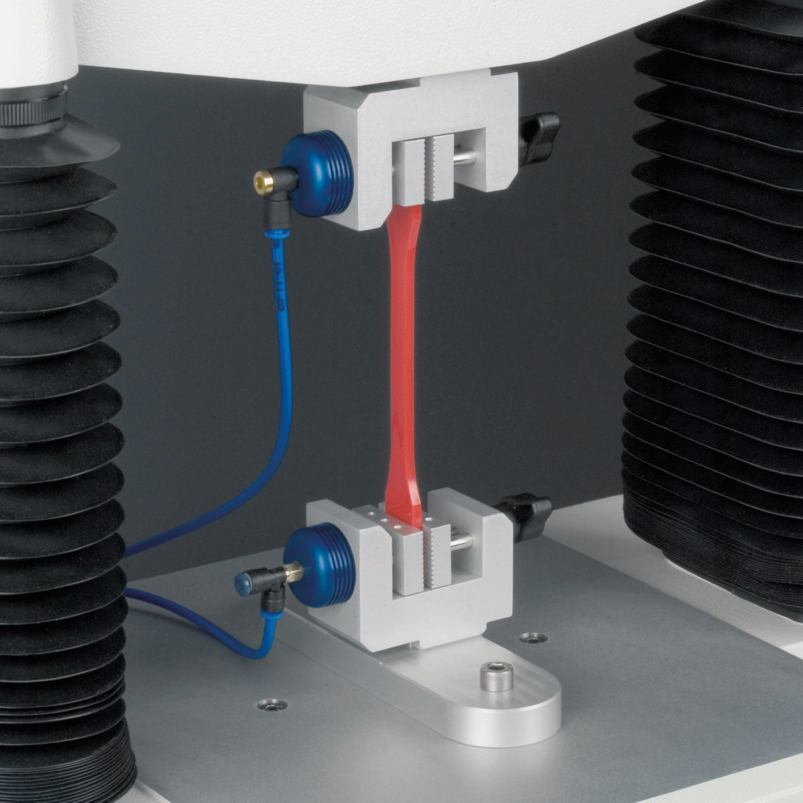
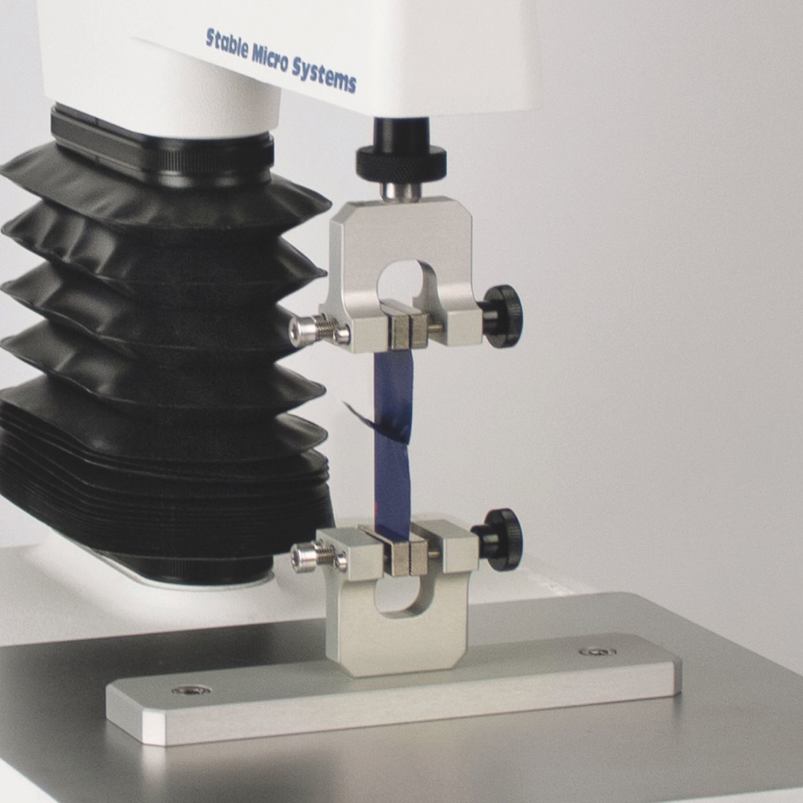
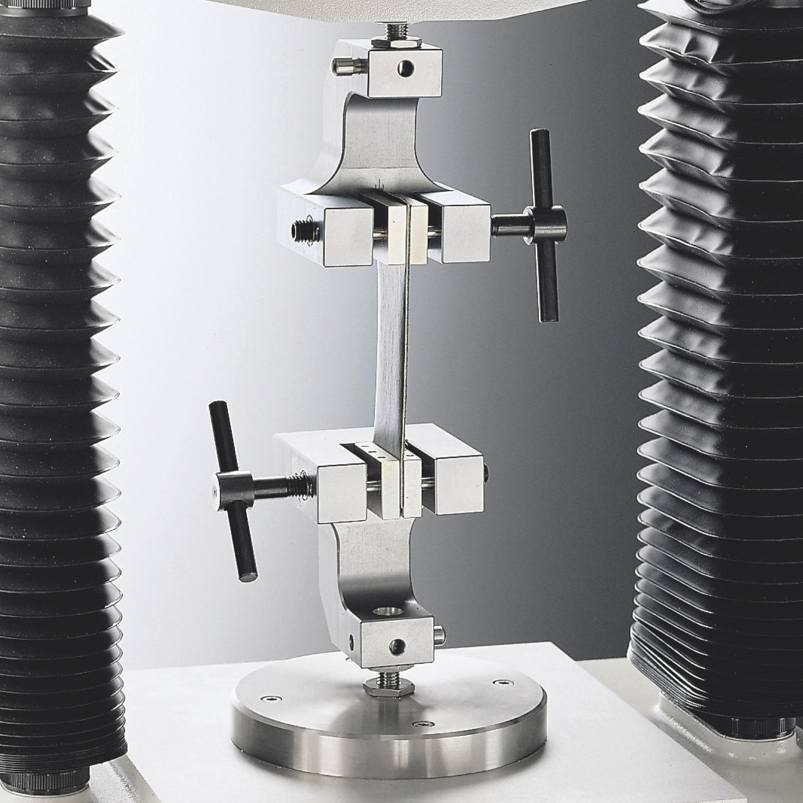
One problem with many foods is that of holding the sample so that the break occurs within the sample and not at the jaws that hold the sample. Cutting out dumbbell-shaped test pieces and holding the sample at the wide ends often solve this problem. The sample is then more likely to break in the narrow centre of the test piece. Another method is to encase the ends of the sample between e.g. two pieces of perspex, or freezing the ends before clamping to avoid cutting of the sample at the grip point.
Another approach is to perform a test where the sample is held like a circular drum skin and stretched in all directions by forcing a ball probe through the centre. This type of testing is popular for testing films and certain foods e.g. tortillas where the measurement of burst strength is required.
 Film Support Rig
 Tortilla Pastry Burst Rig
Whilst clamping a specimen for tensile tests may present difficulties, these can often be overcome by careful choice of the clamping attachment and a creative approach to supporting the sample in order to stretch it without breaking at the clamp point.


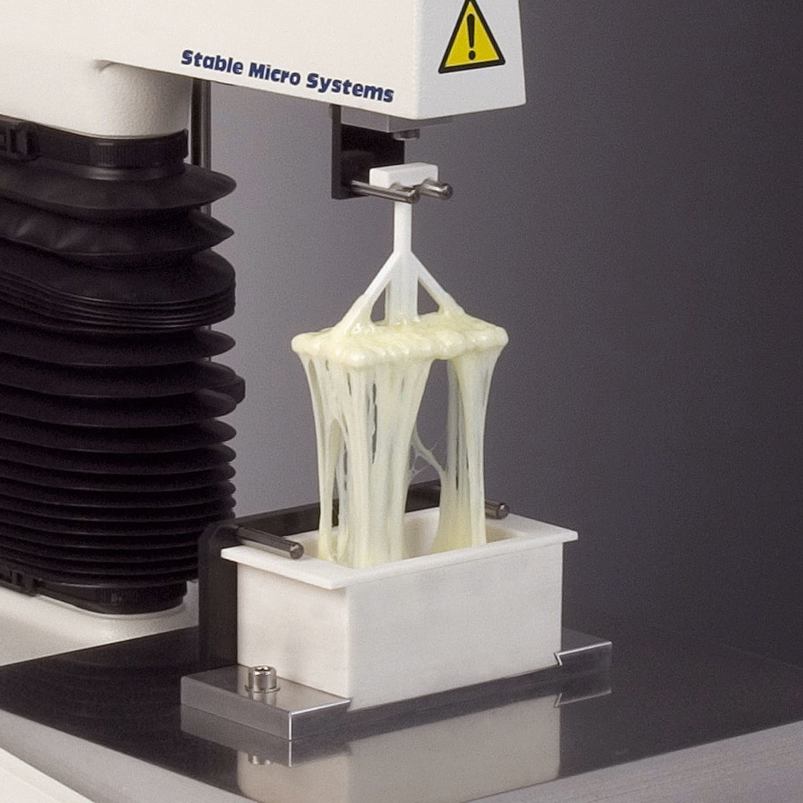


View a complete set of tensile testing probe and attachment options
To see how to perform tensile tests using a TA.XTplusC Texture Analyser to measure tensile strength, tensile 'break point', stretchiness, elongation, burst point etc., watch this video and see typical tensile tests in action:


