



Product overview
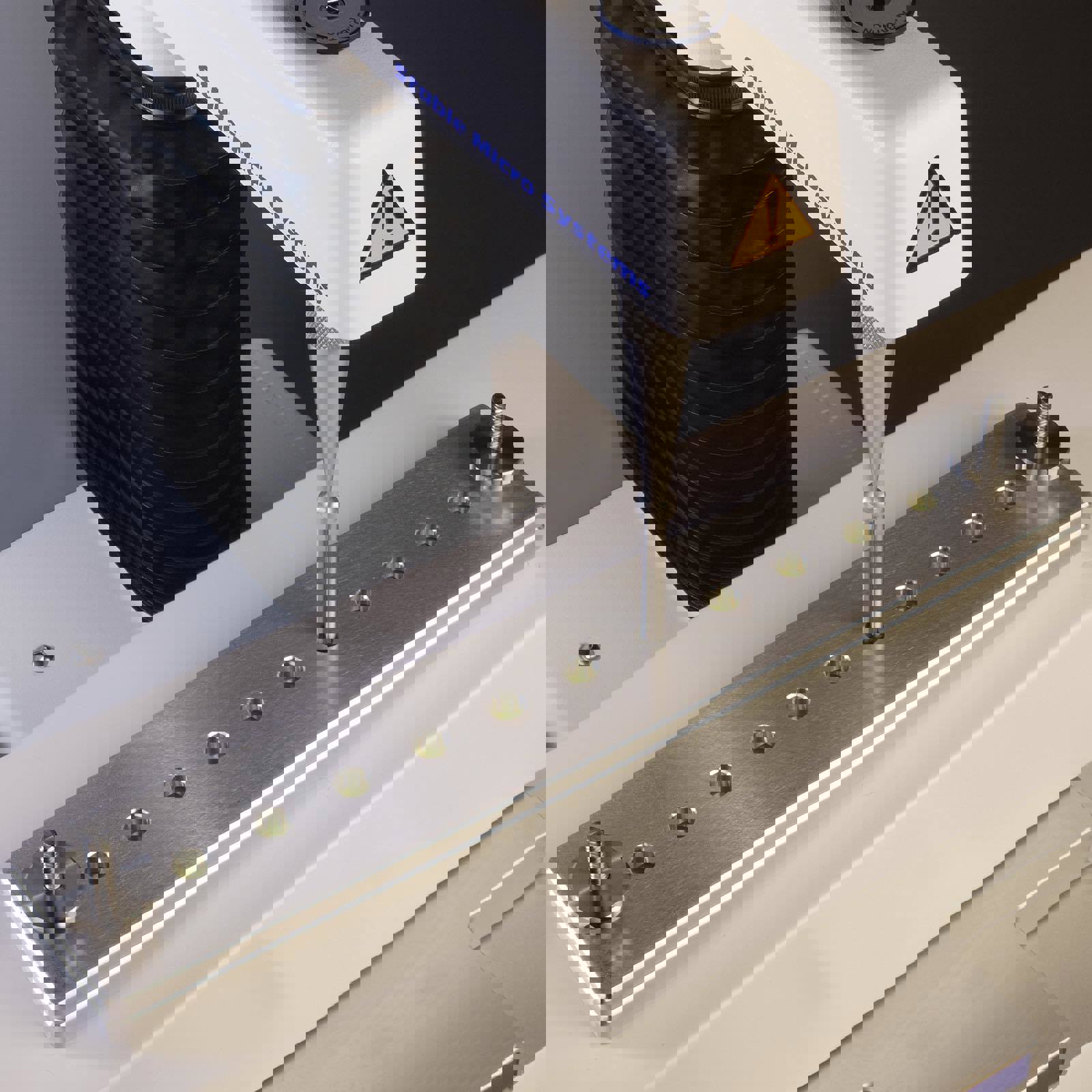
The Automated Linear Indexing System (ALIS) automates the process of texture analysis/physical testing of your products so that instead of supervising the testing samples one at a time a carriage of samples is setup in a line and instructed to test each sample in the same way, having setup the sample number and spacing in a batch testing manner. No operator handling or supervision is required between testing of each sample. This automation thereby provides operator walk-away time, reduces operator error and increases testing efficiency.
The system is designed to be versatile for the testing of a variety of products and testing possibilities and precise in its horizontal movement between samples. It is available in two lengths (250mm or 600mm) and provides two modes of operation: either the platform can be moved and paused for the testing of each sample, or the platform can move simultaneously with the Texture Analyser arm for e.g. controlled (single or multiple) speed peel tests.
How the ALIS works
It works by mounting multiple test samples in bespoke support plates onto the TA.XTplusC Texture Analyser in a linear platform which then systematically moves each sample in turn into position under the instrument arm for testing. Test results are collected as individual files between the testing of each sample.
Typical single tests that can be automated
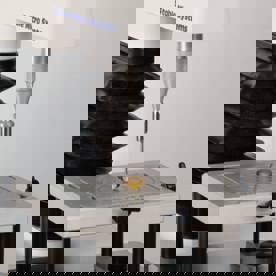
Capsule puncture
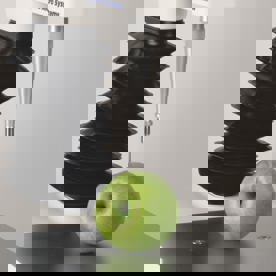
Fruit firmness by penetration

Bloom testing of gels

Tablet break

Button pressing

Actuation of e.g. aerosols, inhalers

Adhesive tape peeling

Film rupture
Advantages of this system

Allows multiple sample testing with minimal supervision, enhancing lab productivity
Reduces manual effort, enabling efficient use of skilled technician time
Offers range of movement and speed, high positional accuracy, and customisable testing protocols
Works cohesively with the TA.XTplusC Texture Analyser for easy setup and operation
Examples of how a bespoke system can be setup

Adhesion testing
Measuring the force required to peel an adhesive tape from a surface.

Penetration testing
Testing samples of hard confectionery to ensure that bite force required is not excessive.

Compression testing
Repetitive testing of a series of baked product samples to assess textural quality and freshness or the diametral compression of tablets.
Designing your automated test
The ALIS integrates smoothly with the Texture Analyser and existing Exponent/Exponent Connect software which provides the simple interface for the entire system. This interface requires entry of setup parameters that define the configuration of the test such as test speed, degree of sample deformation and speed of data acquisition, in a project based environment.
A batch testing window allows the setup up of a multiple testing protocol to move the testing platform in either direction, either in short distances between tests or longer distances for e.g. return to home and start again for continuous operation). For programming of test procedures, the software interface provides either a ‘set location’ (regular spacing) mode or a ‘define location (irregular spacing)’ mode.
The ability to add customisable operator prompts allows warning messages and instruction to the user to be configured.
 Choosing how to test your samples
 Adding operator prompts
 Configuring test positions according to bespoke test plate
Test probe options

The Multi-head Indexing Probe is another application for the Automated Linear Indexing System that allows samples to be tested without manual intervention between tests or the need to clean/dry probes in between sample tests.
This thereby allows for ‘walk-away’ time from testing due to the system being able to automatically index to a new probe after each test.
Safety features
- Buttons on the front of the Control Unit allow the user to move the platform in either horizontal direction at 3 selectable speeds during setup but are inoperable whilst the test is running.
- An internal loudspeaker gives audible signals indicating, for example, the end of a test routine, the need for user intervention or an error condition.
- A Flash Display is present for use during a test as a warning to other operators unaware of a test which may be currently active or potentially about to move.
What's included
The Automated Linear Indexing System consists of:
Location Plate – attaches to a TA.XTplusC Texture Analyser for mounting of the system.
Carriage Assembly – attaches to the mounting plate. This will include a test platform which is suitable for performing single texture analysis tests without the need to remove the system.
Bespoke Sample Support Plate – attaches to the top of the carriage assembly. This will be different for most user applications and will be designed and manufactured to customer requirements.
Control Unit – connects to the Texture Analyser, the motor and sensors on the carriage assembly.
Specific Software Interface – (part of Exponent software) which will run on the PC to which the Texture Analyser is connected and will be designed for Batch testing configured according to your bespoke test plates.

Technical specification
| Range of movement | 250/600 mm |
| Positional accuracy | ±0.5 mm |
| Speed of movement | 0.1 — 100mm/s |
| Start delay | Up to 9999s |
| Max. vertical force | 1250N |
| Max. horizontal force | 500N |
| Bed height (without sample plate) | 66.5mm |
| Maximum moveable payload | 6kg EDL (evenly distributed load) |
| Electrical supply requirements | 100 — 240V A.C., 3.15 A (max); 47 — 63Hz; 120 W (max) |
| Environmental conditions | 0 — 40°c temperature; 0 — 90% relative humidity (non-condensing) |
| Bench space requirements | ALIS250: 900 mm ALIS600: 1600 mm |