


Complementary powder tests with your Texture Analyser
Compaction, caking, yield stress and shear – expanding your powder testing beyond flow.

We don’t just measure powder flow – we offer complete powder testing from ingredient to finished product.
When coupled with a Powder Flow Analyser, the TA.XTplusC Texture Analyser gives you a complete range of testing solutions for both your powders and end-products, making it one of the most versatile instruments available.
Within the same instrument, you can perform well-established tests such as unconfined yield stress, uniaxial powder compaction, diametral tablet compression, granule compressibility, single-particle mechanical strength and progressive swelling or disintegration. Alternative powder test systems rarely provide such a comprehensive range of possibilities from powder to finished product.
Use this page to explore alternative and complementary powder product tests that can be performed on your Texture Analyser.
When are Texture Analyser powder tests most useful?
Texture Analyser powder tests are most useful when product strength, breakage, or mechanical integrity is the primary concern rather than flow alone. These tests assess powder bed strength, cake durability, penetration resistance, and failure behaviour under defined mechanical loading. They are particularly relevant for tablets, compacts, agglomerates, and powders that must withstand handling, storage, or consumer use without excessive breakage or dust generation.
Powder compaction and tablet strength
These tests focus on how powders compact and how tablets perform under load. They are particularly useful in pharmaceutical, nutritional and compressed-food applications.
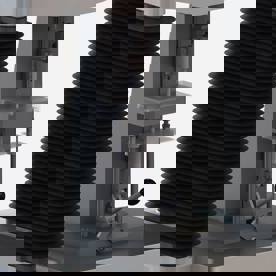
High Tolerance Powder Compaction Rig
For high-force applications where punch/die clearance is critical to assessing compaction properties.
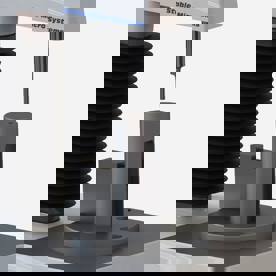
Low Tolerance Powder Compaction Rig
For compaction tests where clearance is less critical.
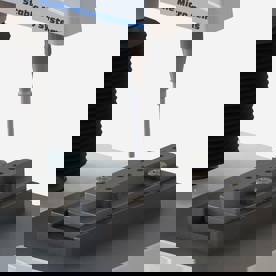
Indexable Powder Compaction Rig (5mm)
For low-compaction force testing of multiple powder samples in a single sequence.
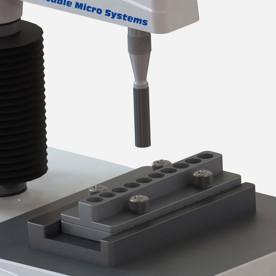
Indexable Powder Compaction Rig (0.5")
For low-compaction force testing of multiple powder samples in a single sequence.
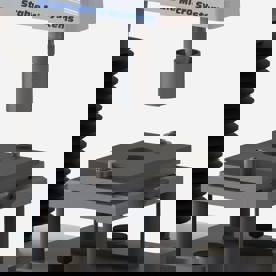
Granule Compaction Rig
For assessing granule hardness and compressibility before tabletting or further processing.

Cylinder Probes (diameter larger than sample)
For diametral tablet compression and measurement of single-particle strength or progressive swelling/disintegration of granules and pellets.
Typical examples of these tests
Caking, consolidation and yield stress
Where powders consolidate during storage or transport, you may need to go beyond flow measurements to understand caking behaviour and bulk strength.
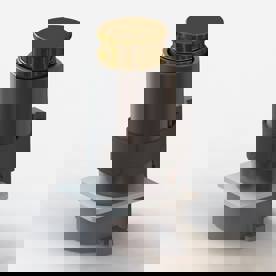
Powder Consolidation and Caking Rig
Assesses caking behaviour after consolidation at defined stresses, helping you imitate storage conditions and quantify cake strength.
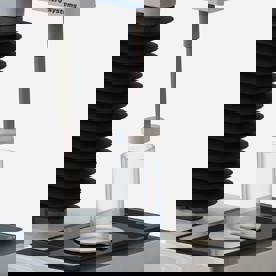
Unconfined Yield Stress Rig
Measures unconfined yield stress of powder samples, providing data that relates to hopper discharge, arching and ratholing risk.

Powder Compression Probe
Applies increasing levels of compression to a conditioned powder column to assess compressibility and compaction behaviour.
Typical example of these tests
Bulk density, shear strength and sample preparation
These tools help you prepare powders consistently and measure bulk density and shear strength with minimal operator intervention.

Split Vessel
Prepares a precise volume of conditioned powder that can be weighed to automatically calculate bulk density.
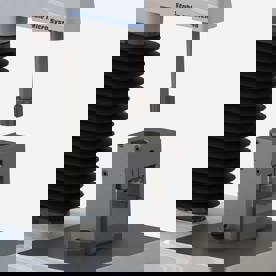
Powder Vertical Shear Rig
Determines powder shear strength with controlled test conditions and minimal operator input, supporting hopper and bin design work.
Typical example of these tests
How these tests complement powder flow analysis
Powder flow analysis using the Powder Flow Analyser gives you a detailed picture of how powders behave under controlled flow conditions. The alternative tests shown on this page provide additional information on compaction, caking, yield stress, compressibility, bulk density and single-particle strength. Together, they allow you to:
- Characterise powders from initial ingredient through to granule, tablet or finished product
- Investigate flow problems from multiple angles (flow, compaction, shear, caking)
- Use a single instrument platform – the TA.XTplusC Texture Analyser – to build a complete powder and product testing toolkit and truly optimised your instrument investment. Why buy several instruments that do individual tests when you have a universal powder parameter measurement solution?
FAQs about related powder tests
If I already have a Powder Flow Analyser, do I really need these other tests?

Not always – it depends on your questions. Powder flow analysis gives you detailed information on how powders behave under controlled flow conditions. The other tests on this page are complementary: they provide extra insight into compaction, caking, yield stress, compressibility, bulk density and single-particle strength. If you need to understand not just how a powder flows, but how it compacts into granules or tablets, cakes during storage or behaves under shear, these additional tests are extremely valuable.
When should I use a compaction rig instead of a Powder Flow Analyser test?
Use compaction rigs when your main interest is what happens as powder is compressed into a tablet, pellet or compact bed, for example:
- Evaluating granule compressibility before tabletting
- Comparing tablet formulations for mechanical strength
- Studying how compaction force affects hardness, friability or disintegration
Use the Powder Flow Analyser when you want to understand how powders behave in hoppers, feeders, conveyors or during filling – that is, under flow rather than primarily under compaction.
What is unconfined yield stress and why might I need to measure it?
Unconfined yield stress is a measure of the strength of a consolidated powder mass when it is no longer confined by walls or external pressure. It’s closely related to hopper discharge problems such as arching and ratholing. Measuring unconfined yield stress helps you:
- Assess whether a powder will discharge reliably from bins and hoppers
- Compare the effect of moisture, storage time or vibration on caking
- Support hopper design and troubleshooting with quantitative data
If you are dealing with persistent discharge issues, unconfined yield stress testing is a useful complement to flow measurements.
How do these alternative tests help with formulation and troubleshooting?
By combining flow tests with compaction, caking, shear and bulk density measurements, you can build a much more complete picture of how a formulation behaves:
- Flow tests show how powders move and discharge
- Compaction tests show how they behave when compressed into granules or tablets
- Caking and consolidation tests show how they change under storage conditions
- Shear and yield tests show how strong consolidated beds are
This multi-angle view makes it easier to choose between formulations, diagnose process issues and justify changes to ingredients or processing conditions.
Do I need separate instruments for these other powder tests?
No. One of the key advantages of the TA.XTplusC Texture Analyser platform is that you can perform many different powder and product tests on the same frame. By changing attachments, for example from the Powder Flow Analyser to a compaction rig, shear rig or caking rig – you can carry out a wide range of tests without investing in multiple stand-alone instruments. That keeps both capital and training costs lower while widening your testing capability.
Are these tests only for pharmaceutical powders?
Pharmaceutical and nutraceutical powders are a major area of use, but these tests are also valuable in:
- Food and beverage powders (e.g. instant drinks, milk powders, cocoa, seasonings)
- Home and personal care (e.g. detergents, cleaning powders, cosmetic powders)
- Industrial and chemical powders (e.g. pigments, fertilisers, metal powders, ceramics)
Any application where powders are compacted, stored, transported or converted into granules, pellets or tablets can benefit from these additional measurements.


