Stable Micro Systems logo
Request a quote
  • Texture analysis
    • Texture Analysers
    • TA.XTplusC
    • TA.XTplus100C
    • TA.HDplusC
    • TA.XTExpressC
    • Compare Texture Analysers
    • Texture Analyser Buying Guide: 7 questions you need to ask
    • Software
    • Upgrades
    • Learn
    • Why measure texture?
    • How a Texture Analyser works
    • A beginner’s guide
    • What is food texture?
    • Texture Profile Analysis (TPA)
    • Texture analysis properties
    • Application areas
    • Speed up your testing
    • Case Studies
    • Attachments and accessories
    • Probes
    • Attachments
    • Acoustic Envelope Detector
    • Video Capture and Synchronisation System
    • Automated Linear Indexing System
    • Temperature Control
    • Dough Inflation System
    • Dynamic Integrated Balance
    • Penetrometer
    • IDDSI System
    • Egg Quality Testing System
    • Accessories
    • Custom design service
    • Test types
    • Puncture and penetration
    • Compression
    • Cutting and shearing
    • Extrusion
    • Bend and flexure
    • Tension
    • Adhesion
    • Other test types
    • Applications
    • Food
      • Alternative proteins
      • Bakery
      • Cereals
      • Confectionery
      • Dairy
      • Gels and films
      • Fish
      • Fruit and vegetables
      • Meat
      • Pasta and noodles
      • Snacks
      • Petfood and animal feed
      • Powder and granules
    • Future and novel foods
      • 3D printed foods
      • Cell cultured foods
      • Foods containing CBD
      • Foods containing insects
      • Upcycled food
      • Vertically farmed foods
    • Reformulated foods
      • Free-from foods
      • Fortified foods
      • Low-in foods
      • Foods for dysphagia (IDDSI)
    • Materials and products
      • Adhesives
      • Electronics
      • Packaging
      • Gels and films
      • Innovative materials
      • Leather and textiles
      • Paper and cardboard
      • Polymers
      • Powder and granules
    • Pharmaceutical and medical
      • Dental
      • Medical devices
      • Pharmaceutical and medical
      • Pharmaceutical packaging
    • Cosmetics and personal care
      • Cosmetics and skincare
      • Personal care products
      • Hair and haircare products
    • Powders and granules
    • View all
  • Materials testing
    • Materials Testers
    • TA.HDplusC
    • TA.XTplus100C
    • Compare Materials Testers
    • Upgrades
    • Learn
    • What is materials testing?
    • Force testing
    • Materials testing properties
    • Application areas
    • Software
    • Case Studies
    • Attachments and accessories
    • Probes
    • Attachments
    • Acoustic Envelope Detector
    • Video Capture and Synchronisation System
    • Automated Linear Indexing System
    • Temperature Control
    • Dynamic Integrated Balance
    • Penetrometer
    • Resistance Conversion Unit
    • Accessories
    • Custom design service
    • Test types
    • Puncture and penetration
    • Compression
    • Cutting and shearing
    • Extrusion
    • Bend and flexure
    • Tension
    • Adhesion
    • Other test types
    • Applications
    • Materials and products
      • Adhesives
      • Electronics
      • Packaging
      • Gels and films
      • Innovative materials
      • Leather and textiles
      • Paper and cardboard
      • Polymers
      • Powder and granules
    • Pharmaceutical and medical
      • Dental
      • Medical devices
      • Pharmaceutical and medical
      • Pharmaceutical packaging
    • Cosmetics and personal care
      • Cosmetics and skincare
      • Personal care products
      • Hair and hair products
    • View all
  • Volume and density
    • Volscan Profiler
    • Volscan Profiler instrument
    • How the Volscan Profiler works
    • Measuring volume and density
    • Software
    • Technical specification
    • Accessories
    • Case Studies
    • Applications
    • Bakery
    • Eggs
    • Other foods
    • Materials
    • Hair
    • Ceramscan
    • Ceramscan instrument
    • How the Ceramscan works
    • Measuring ceramic density
    • Ceramic and advanced material tests
    • Software
    • Technical specification
    • Ceramscan Validation
  • Powder flow
    • Products
    • Powder Flow Analyser
    • TA.XTplusC Texture Analyser
    • Learn
    • How a PFA Works
    • Why measure powder flow?
    • Other powder related tests
    • Software
    • Technical specification
    • Industry examples
    • Case studies
  • Applications
    • Food
    • Alternative proteins
    • Bakery
    • Cereals
    • Confectionery
    • Dairy
    • Gels and films
    • Fish
    • Fruit and vegetables
    • Meat
    • Pasta and noodles
    • Snacks
    • Petfood and animal feed
    • Powder and granules
    • Future and novel foods
    • 3D printed foods
    • Cell cultured foods
    • Foods containing CBD
    • Foods containing insects
    • Upcycled food
    • Vertically farmed foods
    • Reformulated foods
    • Free-from foods
    • Fortified foods
    • Low-in foods
    • Foods for dysphagia (IDDSI)
    • Materials and products
    • Adhesives
    • Electronics
    • Packaging
    • Gels and films
    • Innovative materials
    • Leather and textiles
    • Paper and cardboard
    • Polymers
    • Powder and granules
    • Pharmaceutical and medical
    • Dental
    • Medical devices
    • Pharmaceutical and medical
    • Pharmaceutical packaging
    • Cosmetics and personal care
    • Cosmetics and skincare
    • Personal care products
    • Hair and haircare products
  • Discover
    • Resources
    • Blog
    • Request a brochure
    • Request an article
    • Published references
    • Recommended literature
    • YouTube channel
    • Subscribe to our newsletter
    • FAQs
    • Case studies
    • Food
    • Materials
    • Pharmaceutical and medical
    • Cosmetics, skincare and haircare
    • Volume and density
    • Powder flow
    • About us
    • Company profile
    • Why we are world leaders
    • Careers
    • News
  • Support
    • General
    • Software updates
    • Register a product
    • FAQs
    • Correct use of TPA
    • Glossary
    • User support
    • Technical support form
    • Test advice service
    • Macro writing service
    • Get a new manual
    • Education Zone
    • Tips for Exponent Connect users
    • Training courses
    • Contact your local distributor
    • Product maintenance
    • Calibration
    • Upgrade your instrument
    • UK maintenance plan
    • Latest news
    • Products
    • Research
    • Patents
    • Texture
    • Subscribe to our newsletter
  • Contact
    • Contact details
    • Find a distributor
    • Request a demonstration
    • Request a quote
    • Events and seminars
Request a quote

Why measure texture?

Texture analysis is the mechanical testing of food, cosmetics, pharmaceuticals, adhesives and other consumer products in order to measure their physical properties.

Texture analysis: a practical way to measure physical properties Why measuring texture matters throughout the product lifecycle Sensory analysis vs. instrumental texture analysis – why you need both Across industries: where texture measurement adds value Turning “we can feel it” into “we can measure it”
Person Eating Pain Au Chocolat

Texture is more than “nice to have” – it’s a critical quality attribute

Texture influences how products are processed and handled, how long they stay stable during their shelf-life, and whether consumers accept or reject them. From the bite of a biscuit to the spread of a cream or the break strength of a tablet, texture is a key part of product performance and brand perception. 

When texture is wrong, customers notice immediately. When it is right and consistent, they come back.

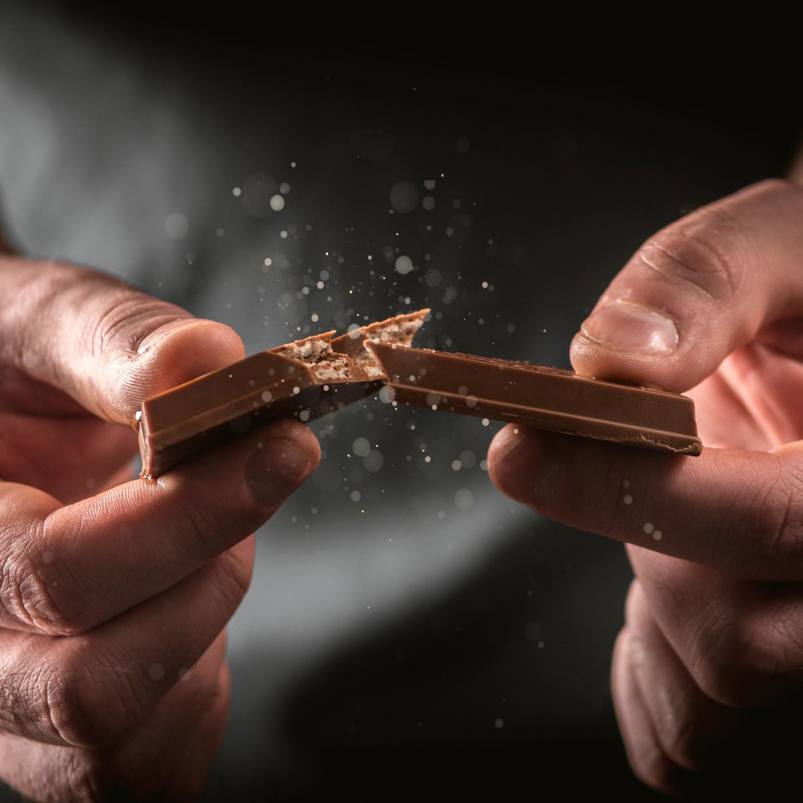
Person snapping a chocolate wafer bar in half
Adhesive substance stretching between two surfaces
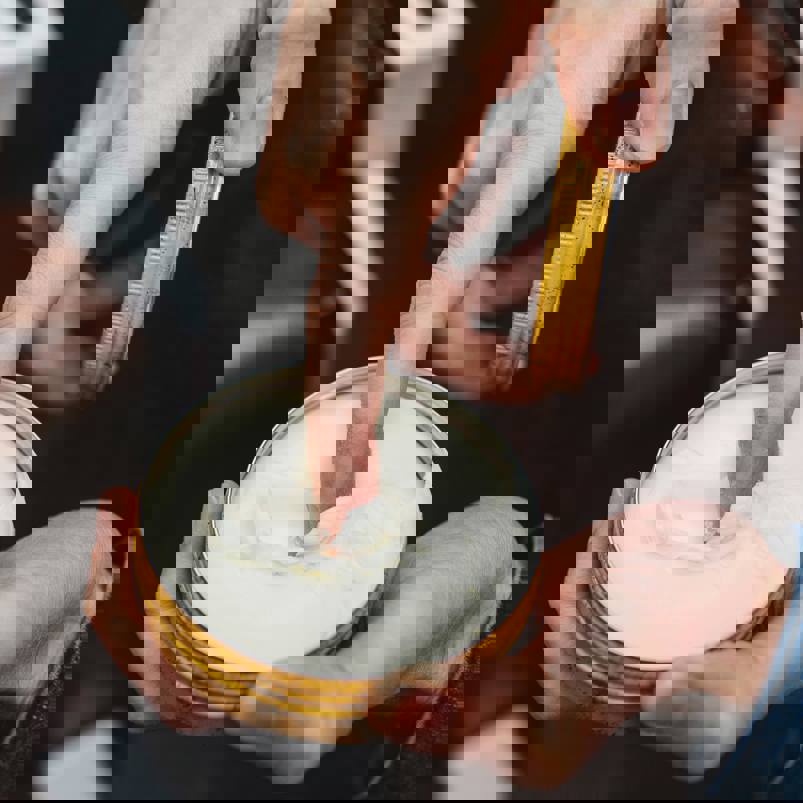
Person using finger to remove personal care product from container
Person snapping a chocolate wafer bar in half
Adhesive substance stretching between two surfaces
Person using finger to remove personal care product from container

Texture analysis: a practical way to measure physical properties

Texture analysis is the mechanical testing of foods, cosmetics, pharmaceuticals, adhesives and other products to quantify their physical properties. 

Using a Texture Analyser, we apply controlled forces to a sample - compressing, penetrating, cutting, stretching or bending it - and record the way the material responds. Force, distance and time are captured at high speed and displayed as a curve, from which we calculate parameters such as hardness, crispness, adhesiveness, firmness, gel strength, bend force, tack and many more. 

Because the same method can be repeated again and again, texture analysis provides objective, repeatable data that can be compared across batches, formulations, suppliers and competitors.

Want a step-by-step introduction to how a Texture Analyser works? Take a look at: Texture analysis – a beginner’s guide and How a Texture Analyser works.

Why measuring texture matters throughout the product lifecycle

1. New product development and reformulation

  • Optimise recipes for the ideal bite, spread, firmness or flow.
  • Match the texture of a benchmark or “gold standard” product. 
  • Understand how changes such as sugar or fat reduction, gluten removal, protein enrichment or clean-label ingredient swaps affect texture, and correct for them.

2. Process development and scale-up

  • Assess how process parameters (mixing, cooking, cooling, extrusion, proofing, drying) impact structure and texture. 
  • Establish process windows that deliver acceptable texture and reduce costly trial-and-error at full scale.
  • Support manufacturing transfer between sites with objective texture specifications instead of purely sensory descriptions.

3. Quality control and consistency

  • Monitor texture at key stages from raw materials, intermediate products, packaging and finished goods to ensure every batch meets specification. 
  • Detect drift in ingredient quality, processing conditions or storage conditions before consumers notice.
  • Reduce waste, rework and customer complaints by catching issues early.

4. Shelf-life and stability

  • Track how texture changes over time under different storage conditions e.g. staling of bread, softening of snacks, thickening or thinning of creams, gel syneresis, caking of powders. 
  • Use objective data to justify shelf-life claims and optimise packaging or formulation to slow undesirable changes.

5. Claims support and competitive benchmarking

  • Substantiate on-pack texture claims such as “10% more spreadable”, “20% crispier”, “extra creamy” or “less sticky” with quantitative measurements.

  • Compare your product’s texture directly with leading competitors or previous versions to demonstrate improvement or parity.

Sensory analysis vs. instrumental texture analysis – why you need both

Human sensory panels are essential to understand how products feel, taste and sound in real use. But sensory testing can be:

  • Time-consuming and resource-intensive
  • Variable between panelists, days and locations
  • Difficult to apply at high frequency in production environments 

Instrumental texture analysis complements sensory work by:

  • Providing objective measurements under controlled conditions
  • Allowing much more frequent testing during production and storage
  • Making it easier to screen multiple prototypes before sensory evaluation

Many of our customers use texture analysis data to predict sensory scores, reducing reliance on full panel tests for every change once the relationship is established.

Across industries: where texture measurement adds value

Food and beverages

  • Control crispness, crunch, chewiness, spreadability, firmness and flow.
  • Support reformulation (sugar, fat, salt, gluten, protein) without sacrificing mouthfeel.
  • Benchmark products and support marketing claims.

Pharmaceutical and medical

  • Measure tablet hardness, friability and disintegration.
  • Assess gel strength, topical product spreadability and syringe forces.
  • Test packaging such as blister packs, sachets and child-resistant closures.

Cosmetics and personal care

  • Quantify the firmness, thickness and spreadability of creams, lotions and gels.
  • Measure the combing forces, break strength or feel of hair and haircare products.
  • Link instrumental results to sensory panels and consumer perception.

Materials, packaging and adhesives

  • Characterise tensile strength, peel, tack, bond strength and flexibility.
  • Test innovative materials, films, foams, electronics and packaging structures.

Turning “we can feel it” into “we can measure it”

We all instinctively feel when a product’s texture is right or wrong. Texture analysis lets you quantify those sensations, build them into specifications and control them day-to-day.

If you can’t measure it, you can’t control it – and if you can’t control it, you can’t guarantee quality.

Why should manufacturers measure texture?

Measuring texture turns a subjective impression (“this feels too soft”) into objective data (“this batch has 20% lower firmness than target”). That data helps you design better products, keep quality consistent, support claims, reduce waste and understand how formulation and process changes affect the way products behave.

What are the main business benefits of texture analysis?

Texture analysis supports the whole product lifecycle. It helps you speed up development, optimise recipes and processes, reduce reformulation risk, maintain consistent quality, extend or justify shelf-life, benchmark against competitors and provide evidence for marketing and technical claims. All of this protects brand reputation and can reduce cost.

Which departments typically use texture data?

Texture data is used by R&D and NPD teams to design and refine products, process engineers to optimise and scale up manufacturing, QA/QC teams to check incoming materials and finished products, and regulatory and marketing teams to substantiate texture-related claims and specifications.

How does measuring texture help with reformulation projects?

Reformulation projects, e.g. reducing sugar, fat or salt, or moving to alternative proteins or clean-label ingredients, nearly always affect texture. Texture analysis lets you track those changes objectively, compare prototypes with a current “gold standard” and adjust formulation or process until the new product matches or improves on the original.

Can texture analysis support on-pack claims?

Yes. Once you’ve established appropriate test methods and baseline measurements, you can use texture analysis to support claims such as “crunchier than our previous recipe”, “extra creamy”, “easier to spread” or “less sticky”. Objective data from a Texture Analyser provides evidence to back up these statements.

How do I start measuring texture in my company?

A practical first step is to identify a few key products where texture is critical and define the attributes that matter most. Working with a Texture Analyser supplier such as Stable Micro Systems, you can then select suitable probes and attachments, adopt proven test methods from your industry, and build internal expertise through training and support.

Contents

  • Texture analysis: a practical way to measure physical properties
  • Why measuring texture matters throughout the product lifecycle
  • Sensory analysis vs. instrumental texture analysis – why you need both
  • Across industries: where texture measurement adds value
  • Turning “we can feel it” into “we can measure it”

Learn more about texture analysis

Read our Texture Analyser Buying Guide
Learn more about the capabilities of the Texture Analyser range
Read case studies using the Texture Analyser
Home
  • Contact
  • Send us an enquiry
  • Request a quote
  • Request a demonstration
  • Find a distributor
Head office

+44 (0) 1483 427345
Vienna Court, Lammas Road
Godalming, Surrey, GU7 1YL
United Kingdom

Subscribe to our newsletter
  • LinkedIn
  • YouTube
  • X (formerly Twitter)
  • Facebook
Copyright © 2025 Stable Micro Systems. All rights reserved. Privacy and cookie policy Sitemap