

Texture analysis – a beginner's guide
Learn the basics of texture and how it can be measured.


If you work with foods, cosmetics, pharmaceuticals or other consumer products, you will already be familiar with texture: the way something feels when you bite, spread, squeeze or handle it. Crisp crackers, chewy sweets, firm gels, smooth creams and thick pastes all have recognisable textural signatures.
For a closer look into what food texture and mouthfeel are, see our dedicated page What is food texture?. Here, we focus on how we measure those characteristics.
What is texture analysis?
Texture analysis is the science and practice of objectively measuring the mechanical and physical properties of a product - properties that consumers experience as hardness, crispness, chewiness, spreadability, stickiness and more.
Instead of relying only on people’s descriptions, we use controlled mechanical tests to apply forces to a sample and record how it responds to:
- Compression or penetration
- Cutting or shearing
- Stretching or bending
- Extrusion and flow
The resulting force-distance/time curves are then analysed to calculate parameters that relate to sensory perception and functional performance.
What is a Texture Analyser and how does it work?
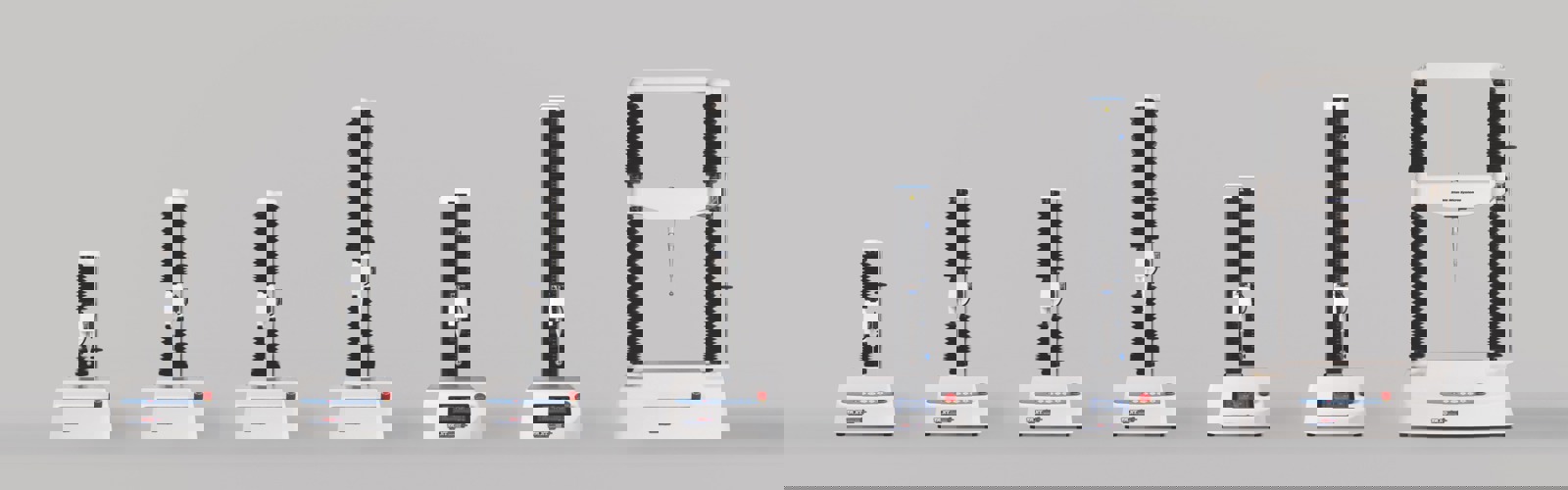
A Texture Analyser is a precision instrument that moves a probe or attachment up and down to deform a sample in a controlled way.
- The moving arm is fitted with a Load Cell which measures force.
- As the probe compresses, penetrates, cuts or stretches the sample, the instrument records force, distance and time.
- This data is displayed as a curve which can be interpreted to understand product behaviour.
By fitting different probes and attachments, a Texture Analyser can perform a wide range of test types – for example:
- Compression of gels, tablets or bakery products
- Penetration of semi-solid foods or creams
- Cutting of cheese, meat, fruits, vegetables or confectionery
- Bending of bars, biscuits or materials
- Tensile testing of films, pastes, doughs or packaging seals
From these tests we can measure properties such as fracturability, firmness, chewiness, stickiness, spreadability, extensibility, springiness and more.
What is food texture analysis?
Food texture analysis is simply texture analysis applied to foods and beverages.
We use the Texture Analyser to replicate the kinds of forces food experiences when it is:
- Processed (mixed, pumped, extruded, baked, frozen…)
- Stored and transported
- Chewed, spread or handled by the consumer
Common uses include:
- Checking the crispness of snacks and biscuits
- Measuring the firmness or creaminess of dairy products
- Assessing the chewiness of confectionery or meat products
- Quantifying the spreadability of spreads, butters or soft cheeses
- Ensuring the strength and stability of gels, desserts and confectionery
From a manufacturer’s perspective, food texture analysis helps you:
- Ensure ingredients perform as expected in the process.
- Optimise formulation for target texture and consumer liking.
- Maintain consistent quality and shelf-life.
Why measure texture at all?
Texture analysis underpins:
- Product development – turning consumer desires into measurable targets.
- Process optimisation – linking process parameters to texture outcomes.
- Quality control – making sure every batch meets specification.
For a more in-depth look at the commercial reasons to measure texture, see our Why measure texture? page. There you’ll find examples of how texture analysis supports claims, reformulation and competitive positioning.


Sensory analysis vs instrumental texture analysis
Sensory analysis – using trained panels or consumers to evaluate products by sight, smell, taste, touch and sound – is vital. It tells you what people actually experience and prefer.
Instrumental texture analysis:
- Provides objective, repeatable data that is not subject to panel fatigue or bias.
- Is easier to run frequently in production or shelf-life studies.
- Makes it simpler to screen many prototypes before involving a panel.
In practice, most companies use both:
- Use sensory panels to identify key textural attributes and preferred levels.
- Use instrumental tests to measure those attributes routinely and keep them on target.
Where will I use a Texture Analyser?
Texture analysis can add value in many parts of your business:
- Research and development – exploring structures and ingredients, understanding micro- and macro-texture, and developing new methods.
- New product development – benchmarking competitors, optimising formulations and tracking texture over shelf-life.
- Process development – linking processing steps to texture outcomes, identifying critical control points.
- Production and quality control – checking incoming materials, in-process samples and finished products to reduce waste and protect brand reputation.
Ultimately, a Texture Analyser helps you turn subjective impressions into measurable parameters you can control.
What is texture analysis?

Texture analysis is the objective measurement of a product’s mechanical and physical properties, such as hardness, firmness, crispness, chewiness, adhesiveness and spreadability. A Texture Analyser applies controlled forces to a sample and records how it responds so these properties can be quantified and compared.
What is a Texture Analyser and what does it measure?
A Texture Analyser is a precision instrument that moves a probe or attachment up and down to deform a sample in a controlled way. It measures force, distance and time as the sample is compressed, penetrated, cut, stretched or bent. From the resulting curve, you can calculate textural parameters that relate to sensory perception and product performance.
Which products can be tested with a Texture Analyser?
Texture Analysers are used across many sectors, including foods and beverages, pharmaceuticals, cosmetics and personal care, adhesives, packaging and other materials. With the right attachments, you can test anything from biscuits, bread, gels and confectionery to tablets, creams, hair products, films, seals and foams. See all applications of a Texture Analyser.
How does instrumental texture analysis relate to sensory testing?
Sensory testing uses people to judge how a product looks, smells, tastes and feels. Instrumental texture analysis uses a machine to measure physical properties under controlled conditions. The two approaches complement each other: sensory work reveals what consumers prefer, while instrumental data provides objective numbers you can monitor and control in the lab and factory.
Do I need texture analysis in R&D, QC, or both?
Most companies benefit from using texture analysis in both areas. In R&D and NPD, it helps you design and optimise products, understand structure–texture relationships and benchmark competitors. In production and quality control, it provides quick checks to ensure every batch meets specification and that texture remains consistent over time.
Is texture analysis difficult to learn?
Basic texture analysis is straightforward to learn, especially when you start with proven test methods and application examples. Modern software, such as Exponent Connect from Stable Micro Systems, provides sample projects, guided setup (via an Education Zone) and automated analysis. As you gain experience, you can develop more advanced methods tailored to your products.


